If someone says that Spiti is beautiful, don’t believe them because it is a gross understatement. Very simply, Spiti is breathtakingly beautiful! The landscapes are majestic and locals are warm and hospitable. There have been several times during my time in Spiti, that the words like ‘awesome’, ‘beautiful’ or expressions like ‘wow’ have just come out of my mouth without a thought. In week 3, I explored further the places that I had seen before, but week 4 took me to places that I had not been to on my last Spiti trip.
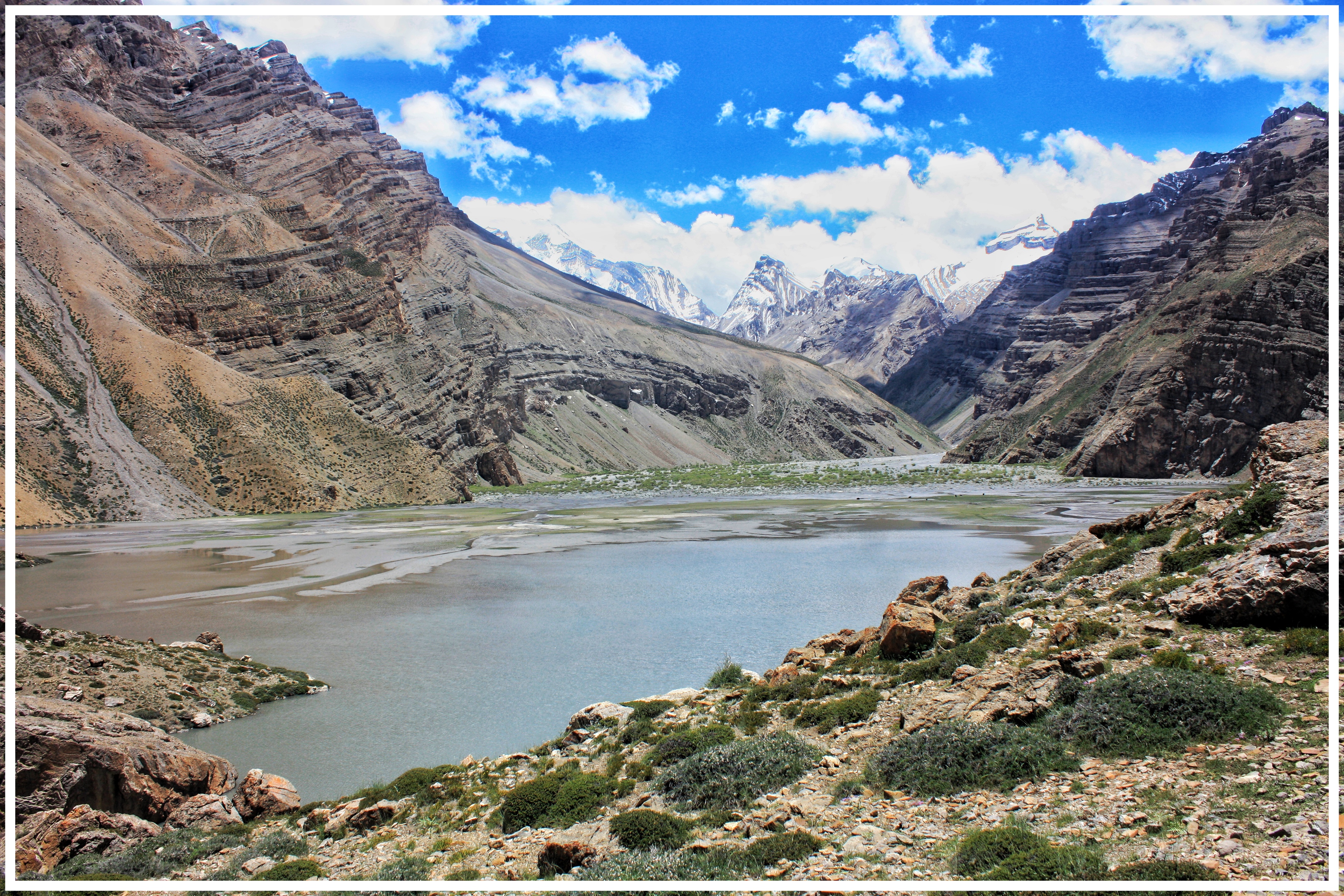
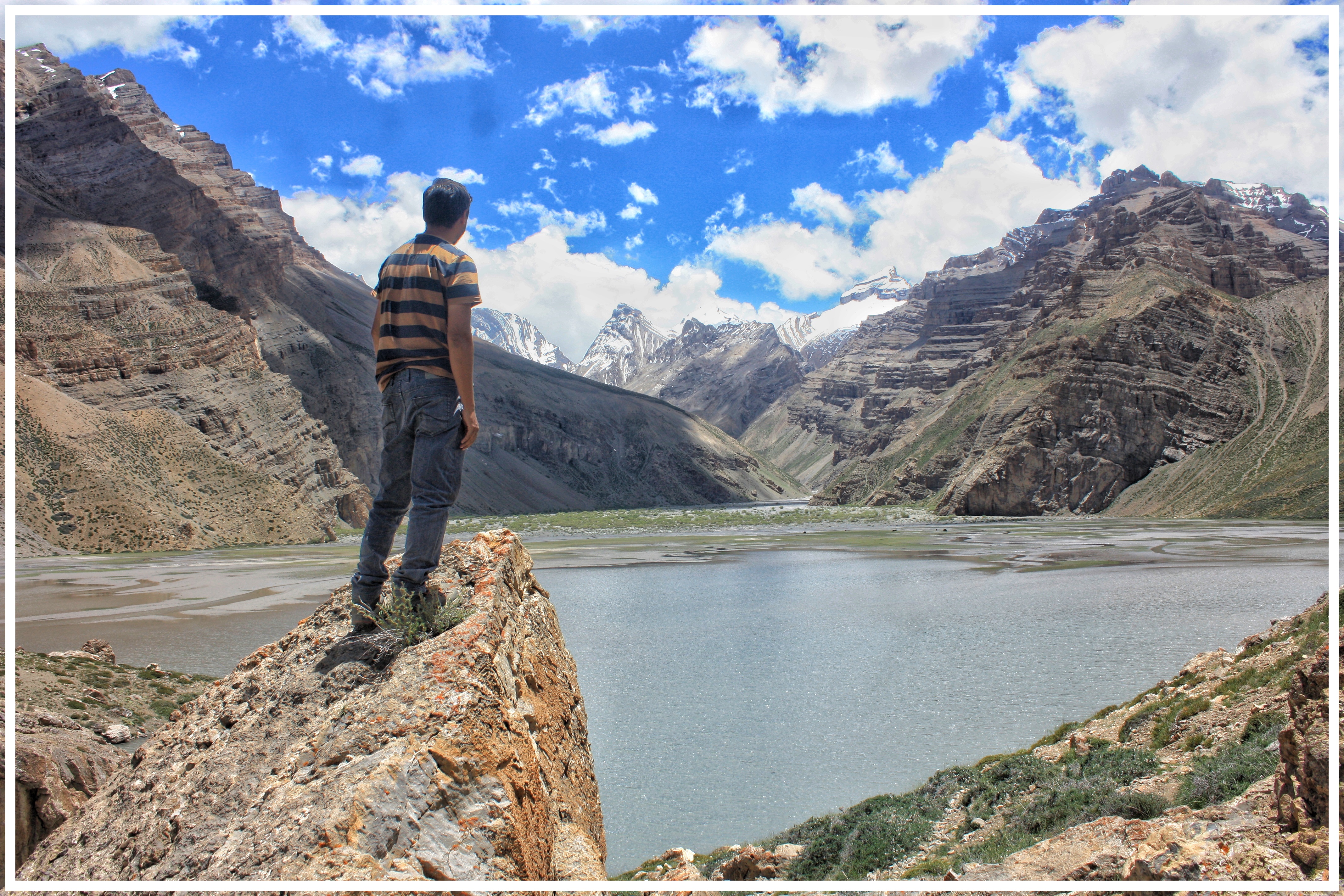
After Dankar, I decided to visit Sapona Lake. I had not even heard about this place until a week ago. It just came up during one of the internet searches for offbeat places to visit in Spiti Valley. Sapona Lake is a high altitude lake that can be reached by an uphill trek of 5 Kms from a village called Maneyongma (a diversion to the left from the main Shimla-Spiti highway 3 Kms before the gate to Dhankar monastery). The “offbeat” nature of the place can be understood from the fact that on the 10 Kms trek and an hour that I spent at the Lake, I didn’t see even a single human being (except the locals at the base village).
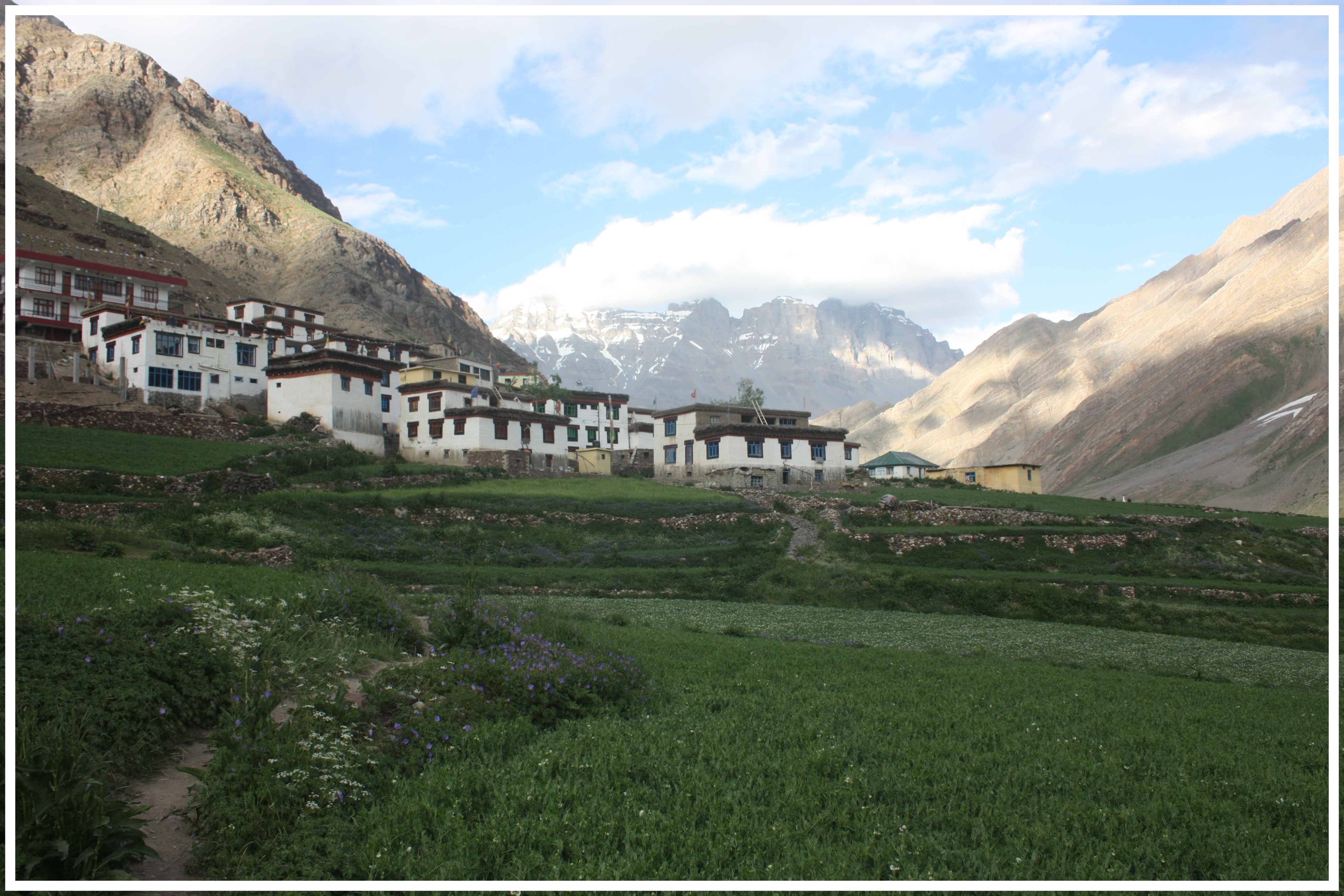
After the trek, I decided to visit Lallung village, a visit that was recommended by the monk at Dhankar monastery. As soon as I reached, I went straight to the monastery. This monastery, along with the monasteries at Tabo and Dhankar, is around 1000 year old. It also has nice wall paintings, but not as expansive as the paintings in Tabo monastery. Nevertheless, a nice place to visit. In the evening, I decided to stay at a home-stay (Konchok home stay), named after 3 year old youngest member of the family. The place was very cosy and had an amazing view from the room. Along with me, the family was also hosting two French guys. I ended up playing the translator between Konchok’s family and the foreigners. Just like hotel stay, home-stay also means an opportunity to take a bath and doing laundry. These tasks were meticulously completed the next morning (really grateful to the granny of the house who offered hot water for the bath and the clothes).
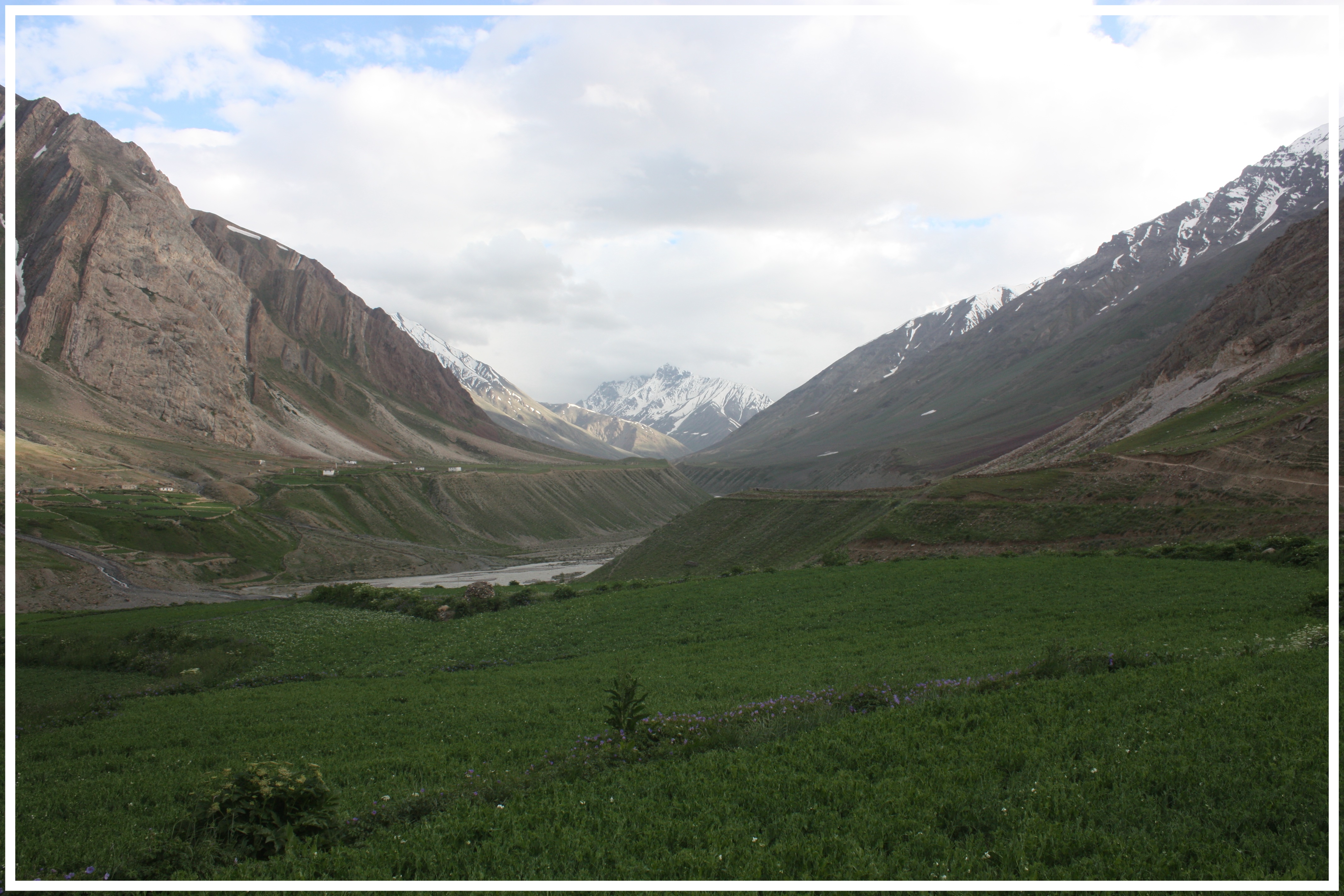
Next morning, I made a late start for mud village, the last motorable village in Pin valley. Mud village is also the end point (or the starting point depending on from where the trek starts) of the famous Pin-Parvati trek which is a multi-day strenuous trek. Since there is nothing much to explore in the village itself, I decided to go on the Pin-Parvati trail for couple of hours. For two hours, I was just walking along a river without much elevation change (not any indication of the difficulty level of the Pin-Parvati trek). When I returned to the village and was settling in the car, I met Amith from Kerela who was travelling alone and had just arrived in Mud. Our travel plans for next few days were similar. As a result, we became travel buddies till the end of our Spiti trip.
Next morning, Amith wanted to visit Dhankar monastery. So we started off the day by visiting Dhankar monastery and then went to Tashigong village, stated to be World’s highest village. Tashigong has just three families and one of them runs a home-stay (Blue Sheep Home-stay) where we stayed for the night. Home-stays are a nice way to meet the locals and know about their daily lives. Apart from the interaction with locals, one also gets to taste the local cuisine which I thoroughly enjoyed during my stay at Lallung and Tashigong.
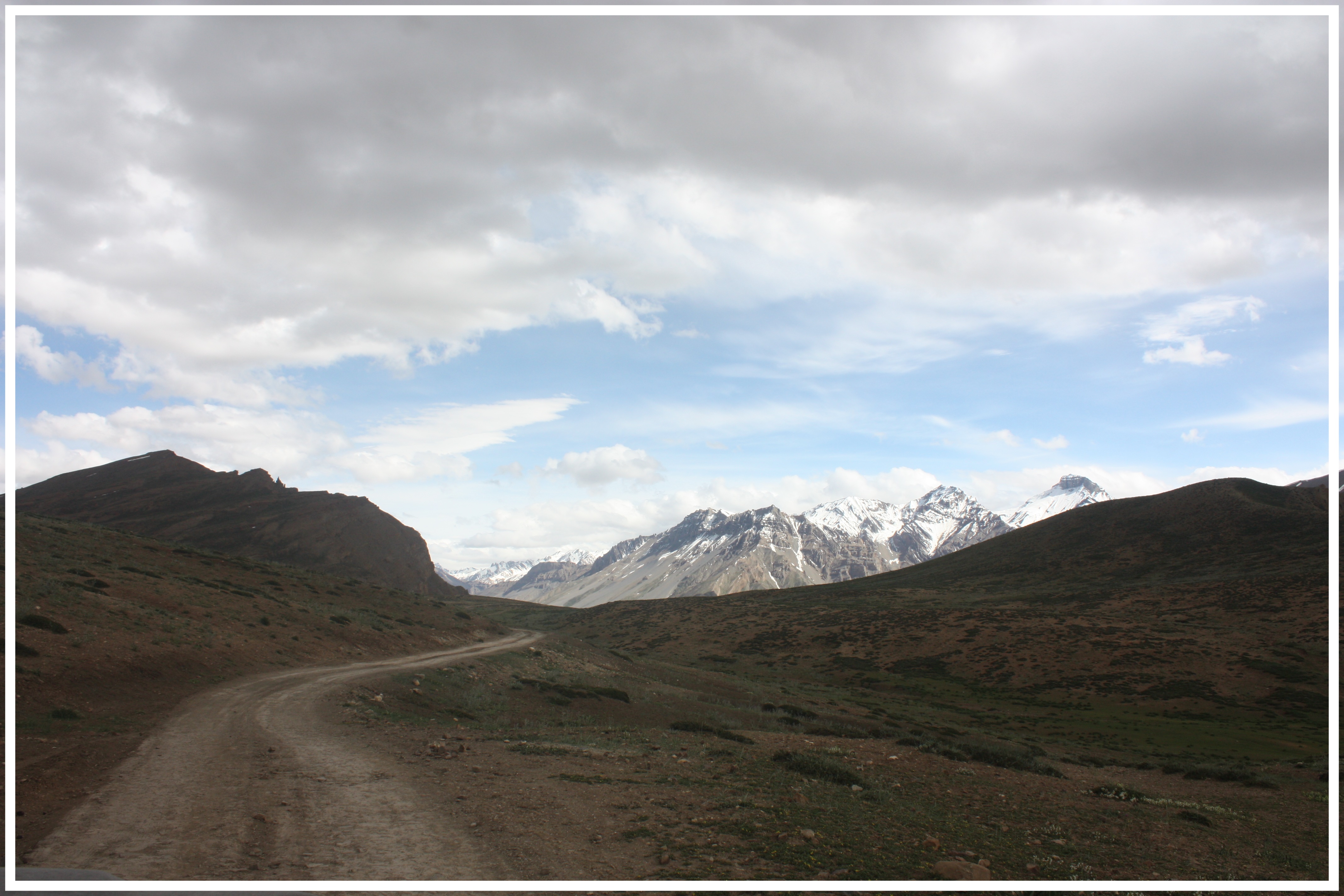
Next morning had an amazing experience in store for us. Upon my inquiry about places to explore around, the host family suggested us to check out few caves nearby. We took half an hour to reach the caves and were surprised to see a gentleman from Bangalore meditating there for more than two months. We had a lengthy chat about what brought him there and what he is seeking. We wished him attainment of what he is seeking and left the place filled with amazement.
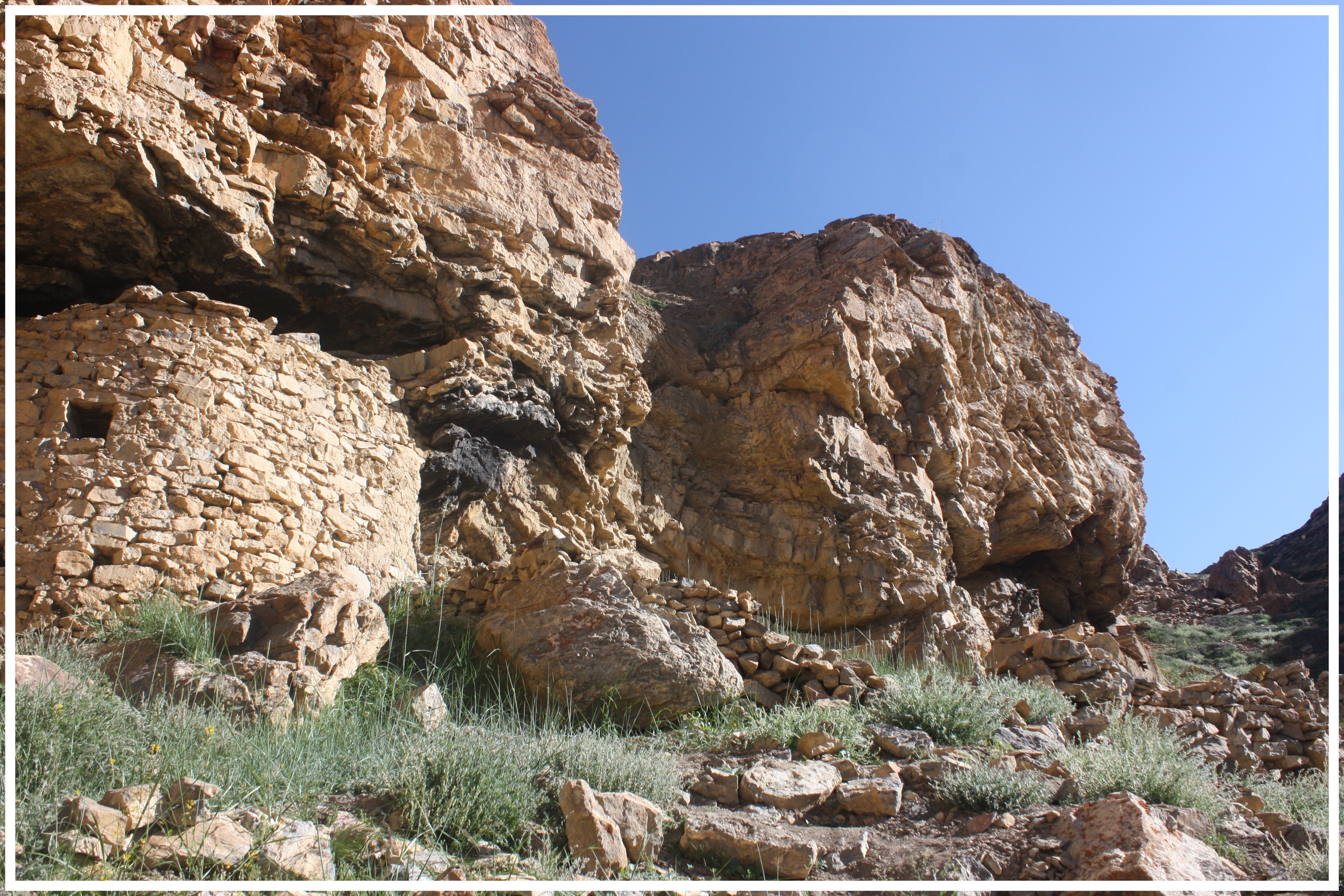
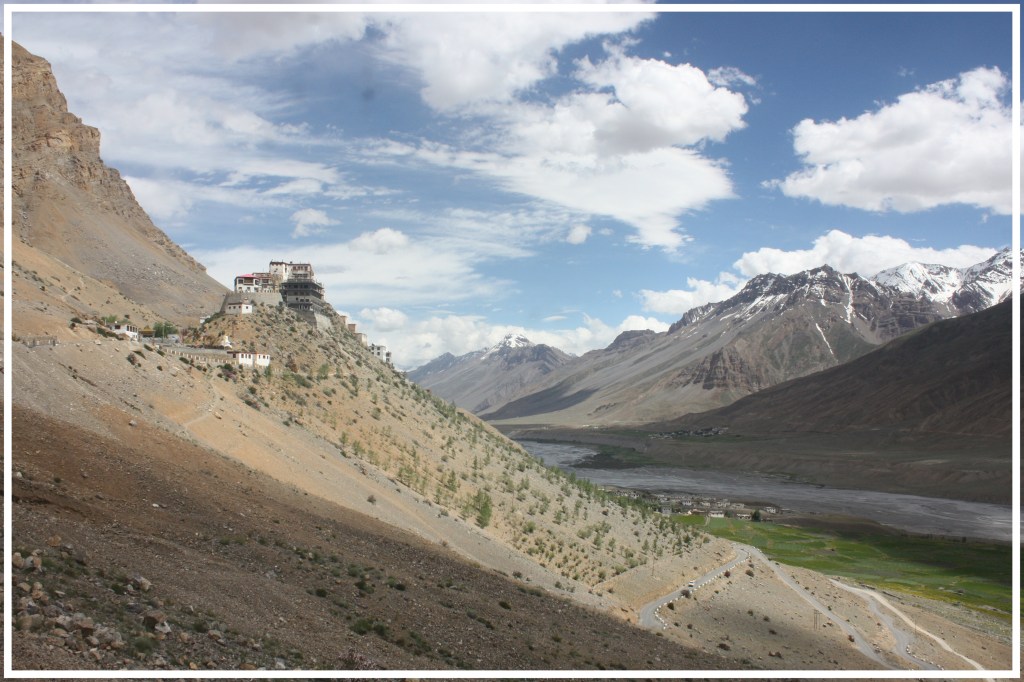
After breakfast that the host family offered us, we went to check out Chicham village, which is little ahead of Kibber (I skipped Kibber village this time) and can be reached after crossing Asia’s highest bridge (at 13596 ft.). After Chicham, we made a top at Key Monastery and then went straight to Leh where my travel buddy left for the home-stay and I went my own way. Since there was still some daytime left, I went to a village 5 Kms short of Leh (from Manali side) to refill the water (I had seen a hand-pump there) and just to kill time. The kids of the village gave me company for rest of the evening and they made sure that I leave their village with no chocolates, candy, jam and bread.
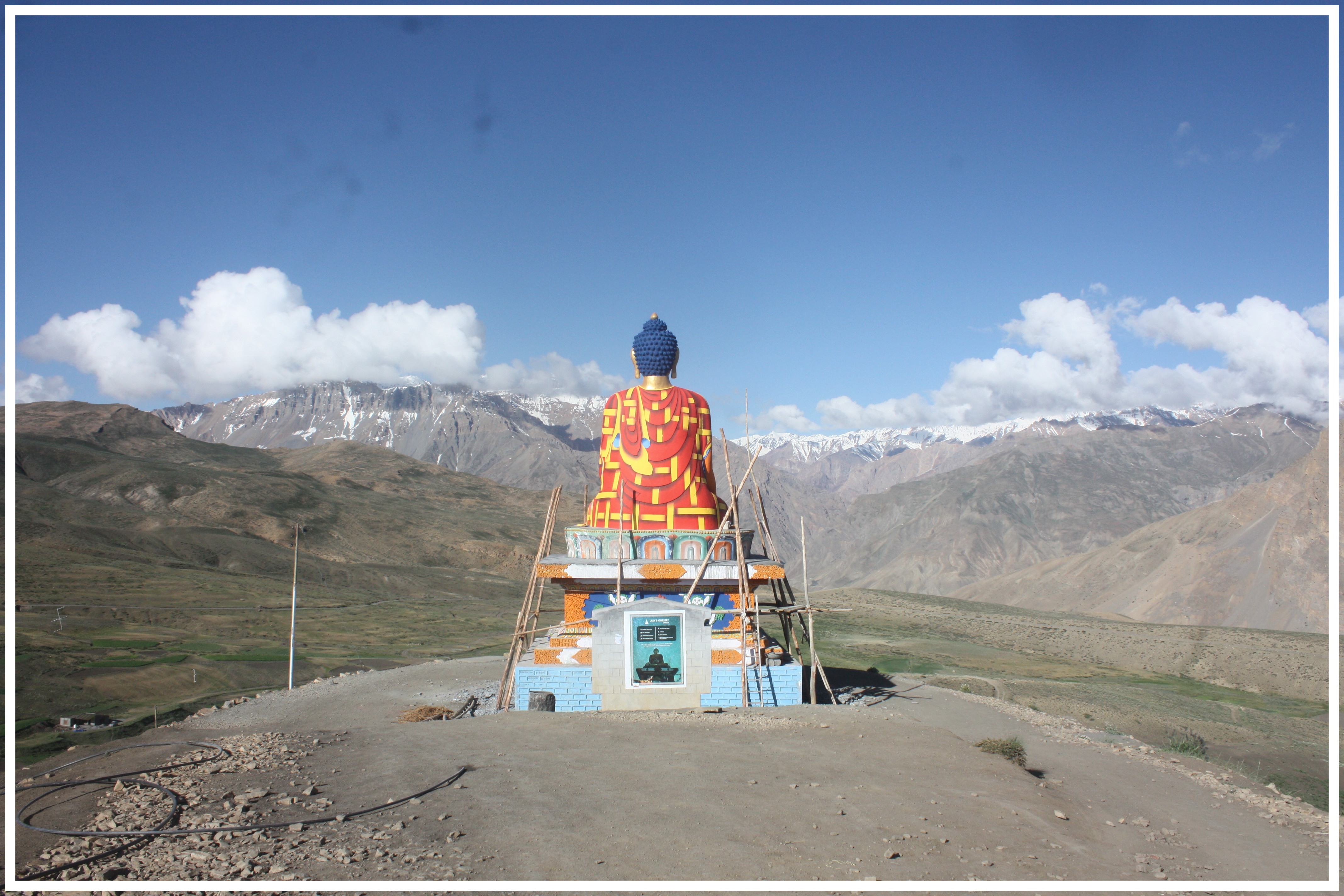
My travel buddy joined me next morning and we first went to Langza village followed by Komic and Hikkim. Langza is famous for a huge Buddha statute overlooking the snow clad mountains. At Komic, after checking out the monastery, we came down to Hilkkim which is famous for world’s highest post office. Like everyone else, we went to the post office and posted few post cards to near and dear ones. It was funny to just sit there and listen to the stuff that some of the people were writing on their postcards (yes, they were loud enough about what they were writing). We returned to Leh in the evening and again went our own ways for the night.
Next morning we started for Chandartaal (Moon Lake because of its crescent like shape). It meant we had to cross Kunzum Pass and then take a 14 Kms diversion which was a scary dirt road when last time I went to Chandartaal. However, this time the road had been widened a bit and I felt more comfortable driving on that road. Chandartaal lake is 1 km away from the end of the motorable road. Considering my promise to explore more at places which I had seen before, this time Amith and I decided to take a walk around the lake and it turned out to be a great walk. I got the opportunity to take few pictures from new angles. On the way back, met another fellow who became the second travel buddy from Chandartaal to Gramphoo next day.
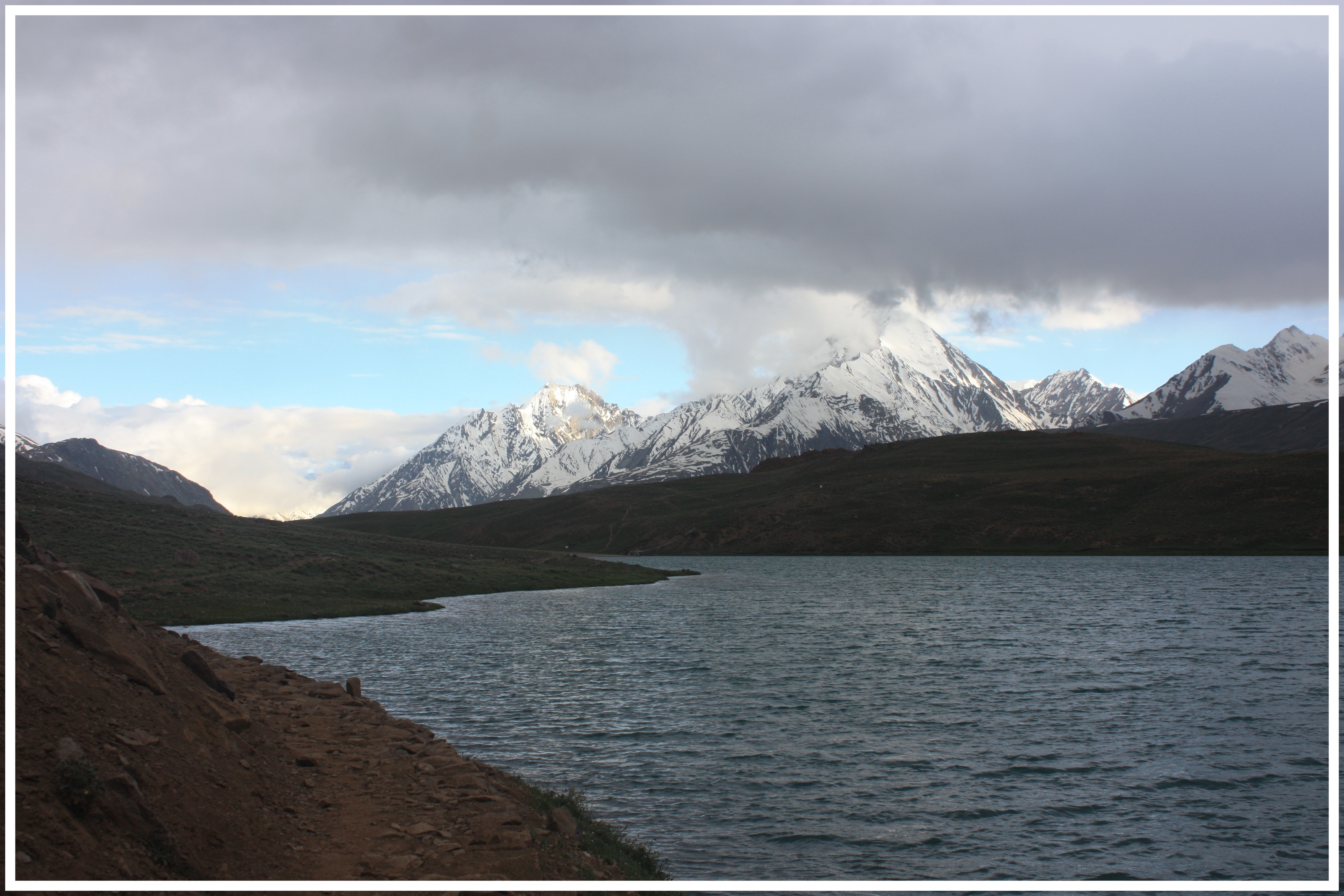
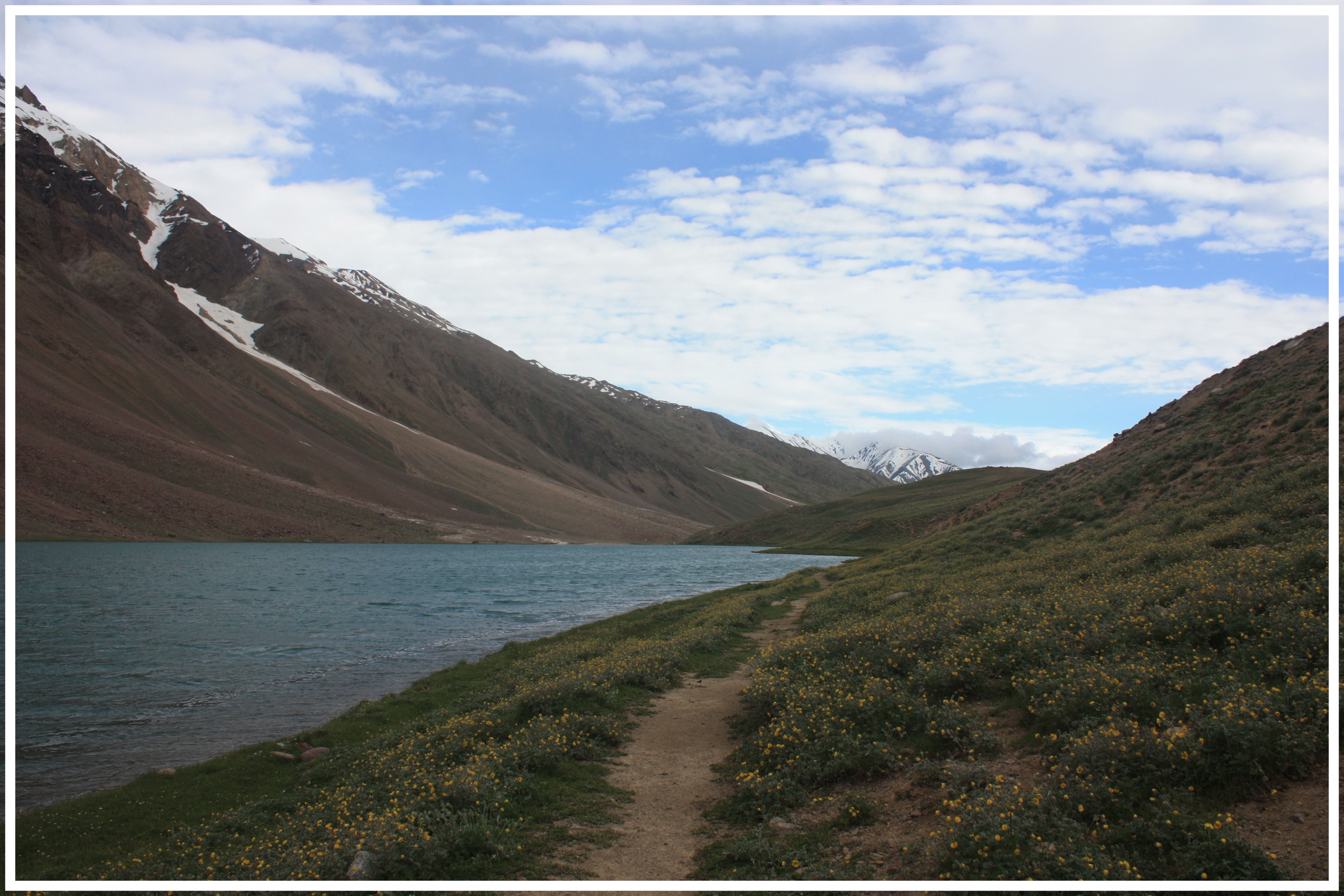
Next morning, we started early and made a stop at famous Chacha-Chachi dhaba at Battal for breakfast (they are known for giving shelter to many travelers during bad weather conditions). After breakfast, we were to navigate some of the worst roads, if not the worst road. For 50 Kms, the road is actually non existent and one has to drive on a river bed with quite a few tricky water crossings at several places (with the ones at Chota Dhara and Bada Dhara being notoriously bad). While most of the vehicles plying on this track are 2wd, but 4wd just gives that extra confidence while maneuvering the tricky parts. It took around 4 hours to cover the 50 Km stretch and at 12:30 when we reached Gramphoo it was time to say Goodbye to my travel buddies. I was again alone and thoughts of being away from family again started bothering me. I stayed parked on the side of the road for two hours thinking if I should just take the turn towards Manali and head home. After much thought, I decided to go up to Keylong and then take a night to think through my next action plan. For the night, got myself into a room and then started the wrestling inside my mind – should I take the Keylong-Chamba route and head to Mumbai after spending some days in Jammu or should I continue the adventure?
More on this in the next post….
 sushil.is.out.of.office